
by RCR Reporters
While much of the debate around pandemic preparedness takes place behind closed doors, last month RCR had the opportunity to take part in that conversation at Australia's Parliament House.
Last month, RCR's Head of Legal, Katie Ashby-Koppens, joined international experts at Parliament House in Canberra for a series of briefings with Australian Senators and Members of Parliament at the invitation of Senator Alex Antic.
The briefings focused on one of the most significant international public policy changes currently underway: the World Health Organization's pandemic reforms and what they mean for Australia.
Leading the discussions were International Health Reform Panel co-chairs Professor Ramesh Thakur, former United Nations Assistant Secretary-General, and Dr David Bell, former World Health Organization physician and scientist.
Katie also presented on how the amended International Health Regulations are already being implemented in Australia, including the significant public expenditure associated with those reforms.
The parliamentary briefings attracted national media attention, with Canberra Daily reporting on the panel's call for greater scrutiny of the evidence underpinning the WHO's pandemic agenda.
Read the Canberra Daily coverage here.
Out of those discussions has come something practical.
A resource for policymakers and the public
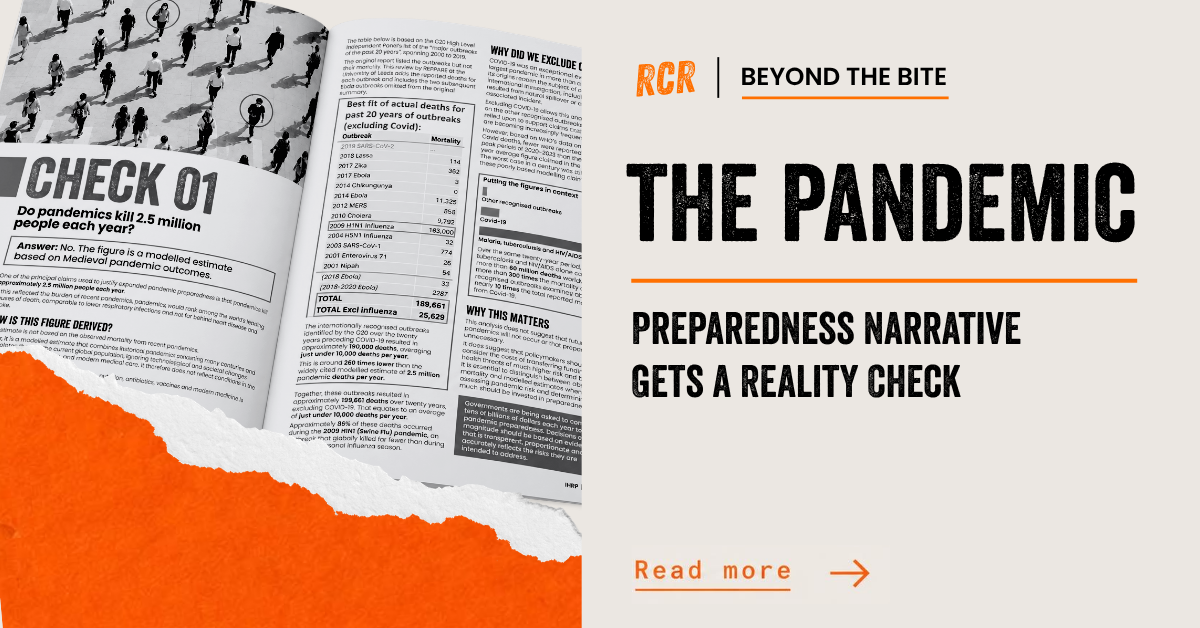
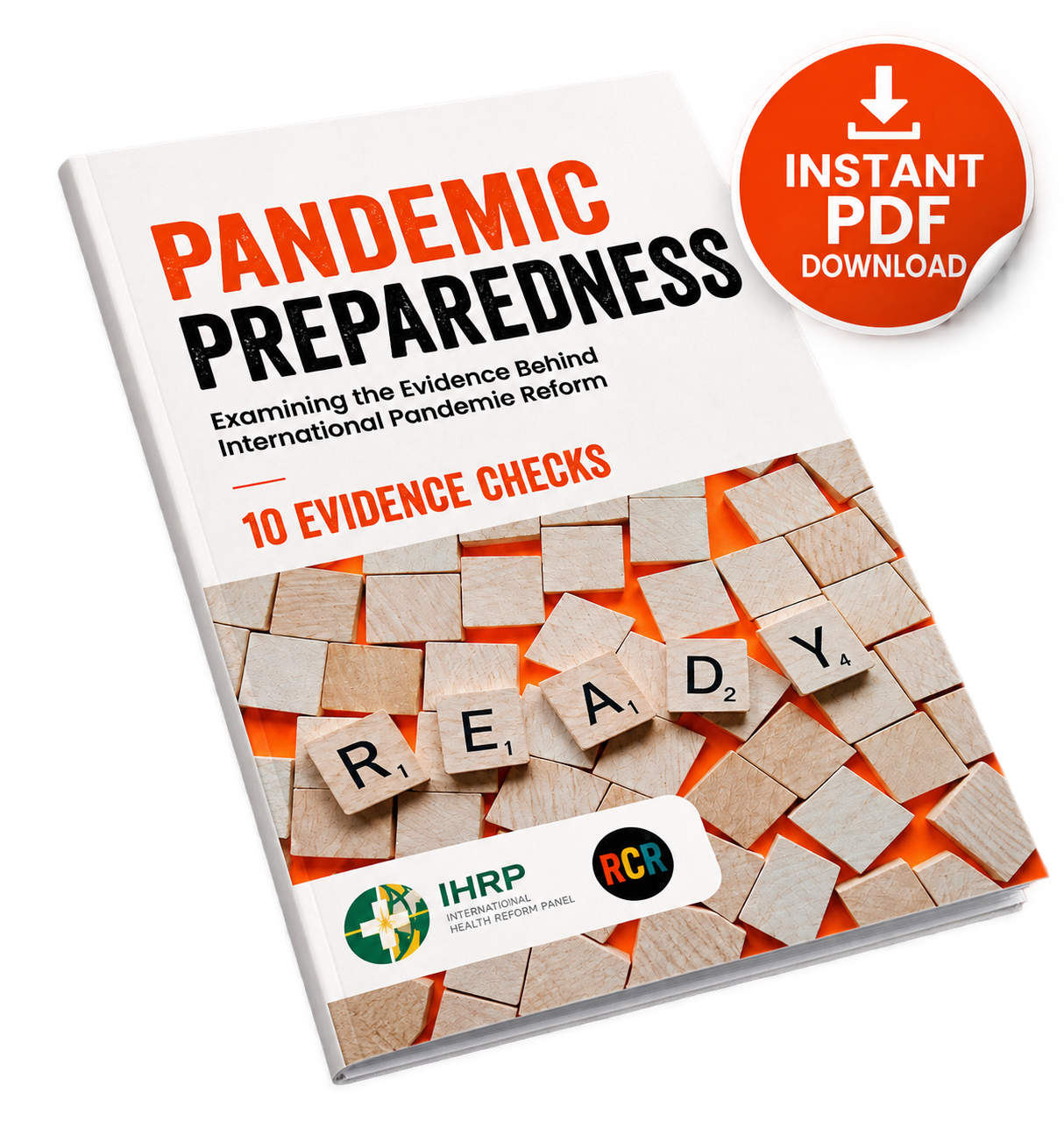
RCR is pleased to have supported both the development and publication of Pandemic Preparedness: Examining the Evidence Behind International Pandemic Reform – 10 Evidence Checks, a concise reference guide prepared in collaboration with the International Health Reform Panel.
Rather than arguing for or against pandemic preparedness, the publication asks a simple question:
Does the evidence being relied upon justify the scale of the reforms now being implemented?
It examines ten key claims underpinning the current pandemic preparedness agenda, including whether:
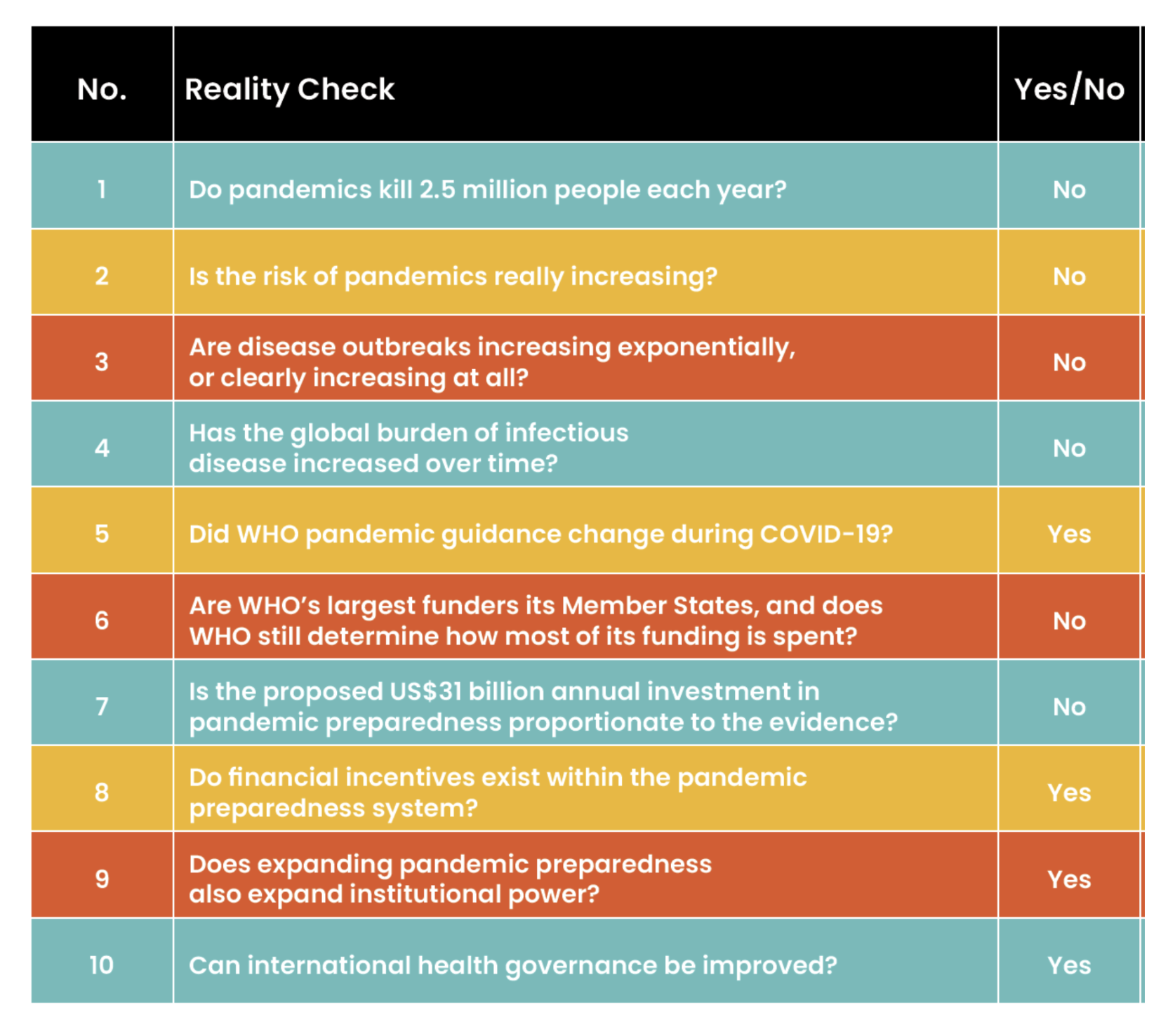
Each chapter summarises the evidence behind one of these claims and encourages readers to examine the underlying sources for themselves.
Why it matters
While the proposed WHO Pandemic Agreement continues to be negotiated internationally, Australia has accepted the amended International Health Regulations and has already begun implementing many of the associated reforms.
Meanwhile, although New Zealand has rejected the amended International Health Regulations, there are indications that aspects of the broader pandemic preparedness agenda continue to be reflected in domestic policy development.
These reforms involve expanded surveillance systems, laboratory capacity, international reporting obligations, emergency coordination and substantial long-term public investment. In Australia, including the Australian Government's commitment of around $500 million to establish the Australian Centre for Disease Control.
Whether readers ultimately agree or disagree with the publication's conclusions, one principle should be uncontroversial:
Major public policy reforms should be supported by evidence that is transparent, proportionate and open to independent scrutiny.
The publication also raises broader questions about the future of the World Health Organization, including whether its current governance, funding model and institutional incentives remain fit for purpose, and what reforms may be necessary to restore public confidence.
Read it for yourself
We encourage readers to download the publication, examine the evidence and reach their own conclusions.
Good public policy depends not only on good intentions, but on transparent evidence, open debate and informed public discussion.
Whatever conclusions readers ultimately reach, one thing is clear: reforms of this scale deserve evidence that is transparent, robust and open to public scrutiny. We invite you to read the publication and decide for yourself.
Our Contributor

Thank you very much for providing this very valuable information. Once you read the attached from the perspective that the UN – and the WHO – are little more than a medical proxy for the World Economic Forum's goal to establish a One World Order, it's hard not to conclude how cynical and corrupt they all are.