
Governments around the world are committing billions to expanded pandemic surveillance, laboratory capacity, emergency infrastructure and international health systems.
Does the evidence justify the scale of what is being built?
Your Information is secure and will never be shared without your express permission. You'll also be kept up to date with any related news and information. You can unsubscribe at any time.
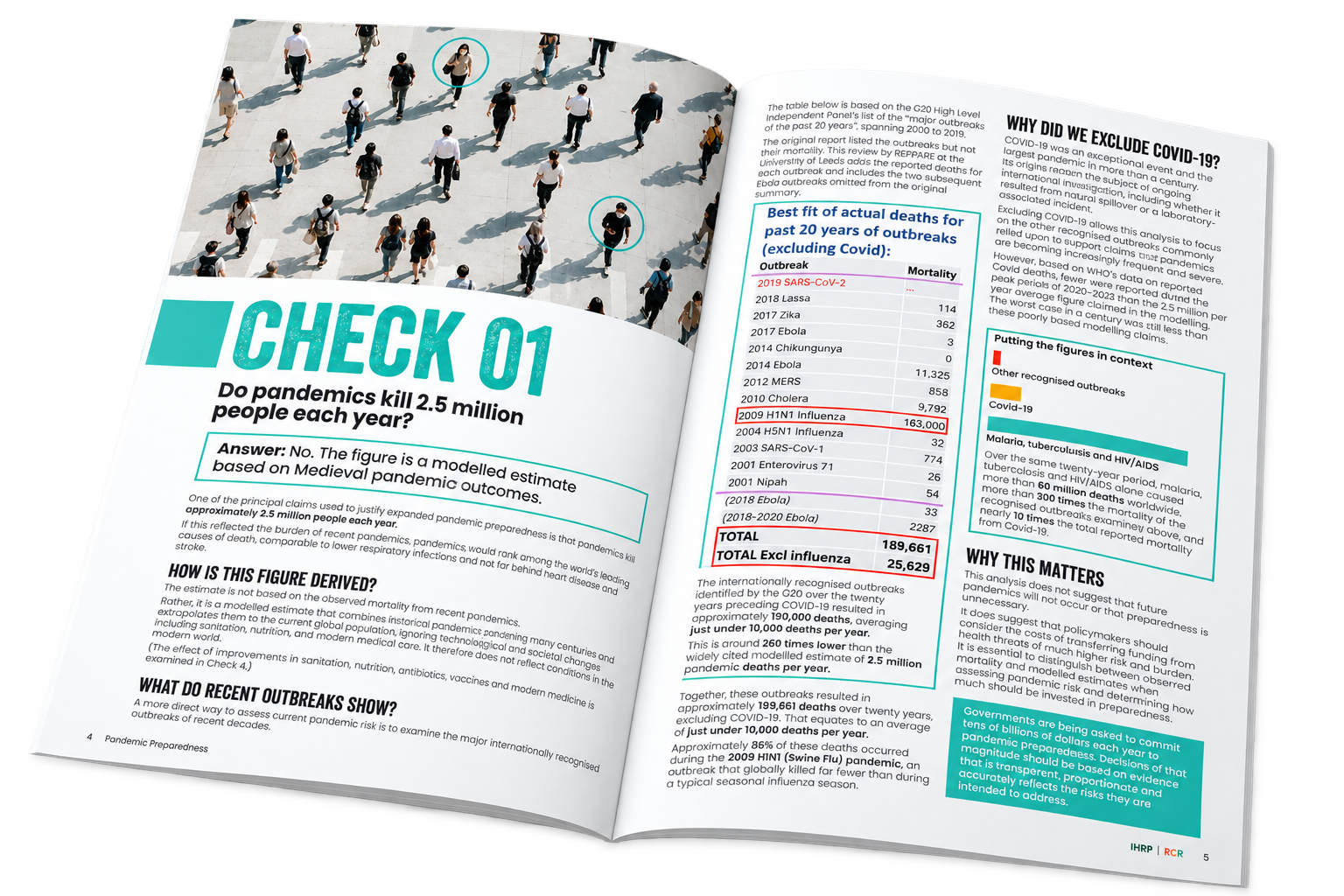
- 1Do pandemics kill 2.5 million people each year?
- 2Is the risk of pandemics really increasing?
- 3Are disease outbreaks increasing exponentially?
- 4Has the global burden of infectious disease increased?
- 5Did WHO pandemic guidance change during Covid-19?
- 6Who actually funds WHO?
- 7Is the proposed US$31 billion annual investment in pandemic preparedness proportionate to the evidence?
- 8Are there financial incentives in pandemic preparedness?
- 9Does pandemic preparedness expand institutional power?
- 10Can international health governance be improved?
Australia has already accepted the amended International Health Regulations and begun implementing associated reforms. New Zealand rejected the amendments, but elements of the wider pandemic-preparedness agenda continue to appear in domestic policy.
These aren't abstract bureaucratic changes. They involve expanded surveillance, laboratory infrastructure, international reporting obligations, emergency coordination and very substantial ongoing public expenditure.
Pandemic Preparedness: Examining the Evidence Behind International Pandemic Reform was prepared under the leadership of Dr David Bell, a former World Health Organization physician and scientist, and Professor Ramesh Thakur, a former United Nations Assistant Secretary-General.
The report brings together evidence and analysis examining the major claims being used to justify the current international pandemic preparedness agenda, asking whether those claims support the scale of the reforms now being proposed and implemented.
The work was developed through the International Health Reform Panel, with analysis drawing on research including the University of Leeds REPPARE Project, and has been produced with the support of RCR Media.
The aim is simple: put the evidence in front of people and let them examine it for themselves.