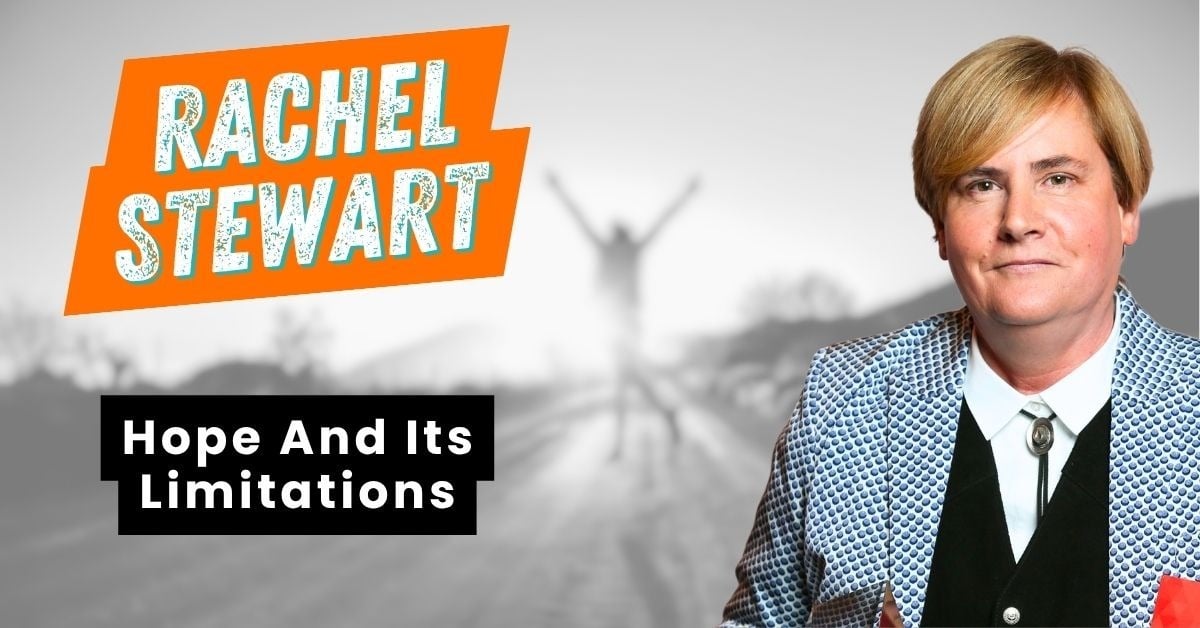
by Rachel Stewart
If you haven’t watched our new show called ‘Both Barrels’ with me and Maree Buscke, where we both shoot the breeze about the things sticking in our craw every week, please do avail yourself.
While recording this week’s third episode I became acutely aware that the dynamic between us is fun yet also fundamentally different. She is a self-described ‘Pollyanna’ while I’m more of a ‘Debbie Downer.’ And that’s maybe what creates the frisson, the watchability.
While we agree on many – even most – things, we are clearly wired differently. For example, while discussing the horrific end for Henry Nowak at the hands of his murderer and also the state, I pointed out that Britain is essentially only one match away from becoming a fireball. Mere hours later a man was lying on a road in a residential street in Belfast with a Sudanese man trying to behead him with a small knife.
Anyway, Maree said she lives in hope about the state of Britain – and the world – because the alternative is too bleak. I think they’re entering a revolution phase and are about to suffer the consequences of that. None of it good, in the short-term at least. All of which got me pondering the concept of ‘hope’ and even ‘optimism’ and what I see as its clear psychological limitations.
Firstly, and unsurprisingly I notice that people – mainly women – who’ve had children use the ‘H’ word a lot? It feels like it’s on an endless loop somewhere, being repeated ad infinitum like a chant, an invocation. As if the Gods are listening. But the universe is stone deaf to what we want.
So what is hope, and why do we think we’ll instantly drop down dead if we stop having it? Could an absence of hope actually create the opposite effect? Because when you think about it, relying on hope maybe one reason why we’re deep in this global doodoo.
When we continue to have hope in democracy, systems, authority, AI, banking or whatever it is, we kind of opt out. We take our foot off the pedal and imagine a white knight will come and save us if necessary. Paternalism rules.
With that frame of mind many truly believe that ultimately good will triumph over evil, so it’s – often subconsciously – decided that everything’s in hand and that our fellow travellers and governments will do the right thing and make sure that, say, men in dresses won’t enter women’s bathrooms and prisons in the name of inclusion or that anti-racism won’t become the anti-white movement it already is or that DEI won’t produce perverse and unfair employment outcomes or that a black man won’t attempt to behead an indigenous Irishman on a public road in 2026 without societal fallout.
But there it is. We are living in the throes of pure shock and horror every day. And in Britain’s case specifically – but it can equally be applied to the state of the world – is there still time to turn the sinking ship around? Let’s get real. It’d take a level of human cooperation, intelligence, and goodwill between all nations hitherto unseen since the dawn of civilisation. What are the chances of that?
Humans forget that each of us are only sitting here today because of the centuries of blood spilled and the sacrifices made by others for their nations, their families, their tribes. We are tribal creatures and that’s a double-edged sword, to say the least.
So would ditching hope create the space to see the world differently? More than that, would it make us more effective at changing things rather than leaving it up to everybody else to pick up the slack?
When it became clear some years ago that hope only served to emotionally enslave me to a system that is designed to actually destroy it, I realised that clinging to hope was like trying to control the fact of my ultimate powerlessness. And, sorry to tell you this, there are no white knights coming to save us.
Let me explain. Just because I hope that I don’t die a horrible, painful death doesn’t mean I won’t. Just because I hope that my friends and loved ones don’t either, doesn’t mean they won’t. Just because I hope that Britain’s politicians will wake up and hear the public’s cries about illegal migration doesn’t mean they will.
People always say you must have hope to go on, and without it why live? I say hope chains you to the same way of thinking, and to the status quo. Counterintuitively, I believe I’m far more effective without it than with it. I’m more prepared.
Since I ditched hope as a construct I’ve been more in the present, and I’m also more effective at doing what needs to be done and facing what’s in front of me. Being alive in the absence of hope can still be fulfilling, fascinating and fun. I mean, we’ve always known our own lives, and everybody else’s, are finite so, what’s the difference?
By giving up hope I’ve also turned away from the culture of politics, the thin veneer of democracy, and any power which that spectacularly broken system has over me – other than playing the game of paying for things I must pay for and staying out of jail because of it.
I’ll also say that, while we have the system we have, find a way to make it work for you. This is election year. Keep voting, keep trying, but don’t give in to the temptation of false hope by voting for parties or people who are never going to get across the line. That’s called cutting your own nose off to spite your face.
Hope removes personal agency. It makes for weakness and lethargy. It looks to everyone else to solve problems. It lets us off the hook. And having no hope does not automatically equate to despair. Having it made me fearful. Now I’m not. And that makes me effective.
And just because there’s no hope for me, doesn’t mean there’s none for you.
Our Contributor
