Well… this is one of those updates we have been hoping to share for a very long time.
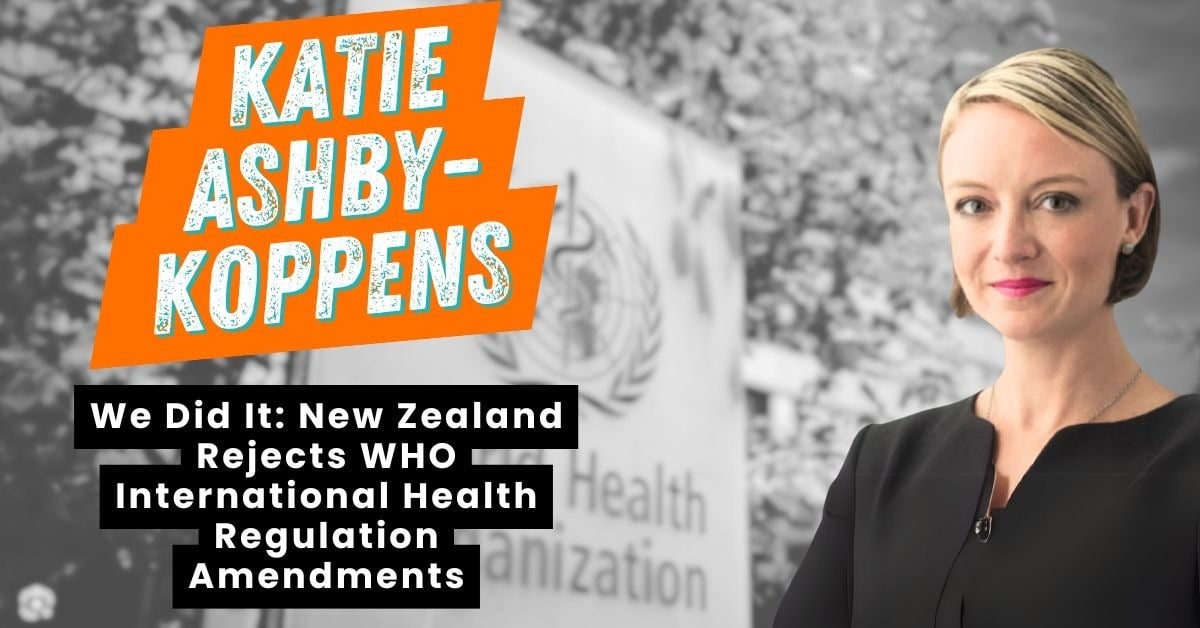
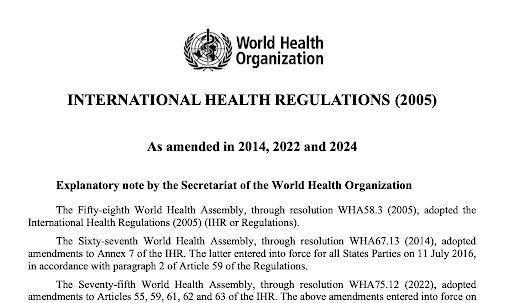
On 17 March 2026, the New Zealand Government confirmed it had formally rejected the proposed 2024 amendments to the World Health Organization International Health Regulations (IHRs), notifying the Director-General in accordance with Article 61 of the Regulations.
This is significant.
And while the announcement landed quietly, with little mainstream media attention, the implications are anything but small.
A Collective Effort
This outcome did not happen overnight. In fact, the rejection only occurred at the eleventh hour.
It reflects years of sustained effort from people across the country. From early awareness raising, to making this an issue during the 2023 election and coalition negotiations, to The People’s Letter, coordinated campaigns, petitions, and social media.
It includes the many conversations that took place in homes, community halls, and local groups. Thousands of New Zealanders took the time to understand what was being proposed and made sure their elected representatives understood their concerns.
Independent media also played a critical role. Reality Check Radio continued to cover the issue when many others would not, interviewing international experts and unpacking complex legal and policy questions.
Our 2024 event with David Bell, Ramesh Thakur, and Katie Ashby-Koppens helped bring credible international voices into the New Zealand conversation. Their presence reinforced that this was not a fringe issue, but one attracting serious global attention.
What New Zealand Has Avoided
Had these amendments been accepted, New Zealand would have been expected to implement a range of new systems aligned with WHO frameworks.
- Establishing a national authority responsible for implementing WHO recommendations and reporting internationally
- Expanding “risk communication” expectations, including around misinformation
- Aligning digital health documentation with WHO standards
- Broadening border powers such as testing, quarantine, and medical measures
- Allowing for expanded sharing of personal health information across borders
By rejecting the amendments, New Zealand has avoided being automatically bound by these expanded obligations, preserving the ability to properly assess them through domestic processes.
What NZ’s Decision Does and Does Not Do
Importantly, this decision does not mean New Zealand is stepping away from global cooperation.
New Zealand remains a party to the 2005 International Health Regulations, which continue to provide a framework for international public health collaboration.
The WHO still has a role to play as an advisory and coordinating body. That was its original purpose, and it remains an important one.
What this decision does recognise, however, is that the WHO is not a democratically elected body, yet its influence has grown significantly.
At the same time, its funding model has increasingly relied on public-private partnerships, raising reasonable questions about independence and influence. This includes relationships with organisations such as the Bill & Melinda Gates Foundation and GAVI.
Lessons from COVID-19
During COVID-19, many observed shifts in WHO guidance, including changes in positions on mask use and vaccination approaches, particularly for younger populations where risk profiles differed and trial data was still emerging.
Experiences like this highlight why it is appropriate for New Zealand to pause, assess, and ensure that any future commitments are clearly in the national interest.
A Sovereignty Decision
The Government’s decision reflects a broader principle.
As stated by Foreign Minister Winston Peters: “Any decisions about the health of Kiwis should be made from Wellington, not Geneva.”
New Zealand First also confirmed that rejecting the amendments was consistent with its coalition commitment to apply a National Interest Test to any international agreements that may limit national decision-making.
This is ultimately a question of where decisions are made, and who they are accountable to.
A Win: But Not the End
This is a significant and positive step.
But it is not the final step.
Attention now turns to the proposed WHO Pandemic Agreement, expected to come into focus in May 2026. The same principles will apply: careful scrutiny, proper democratic process, and a clear assessment of New Zealand’s national interest.
Thank You
This outcome belongs to all of us.
It reflects early awareness, public pressure, political engagement, legal work, independent media, and thousands of everyday New Zealanders speaking up.
It is a reminder that sustained, informed, and collective action can make a difference.
New Zealand has spoken.
Public health decisions should be made by New Zealanders.
Our Contributor
