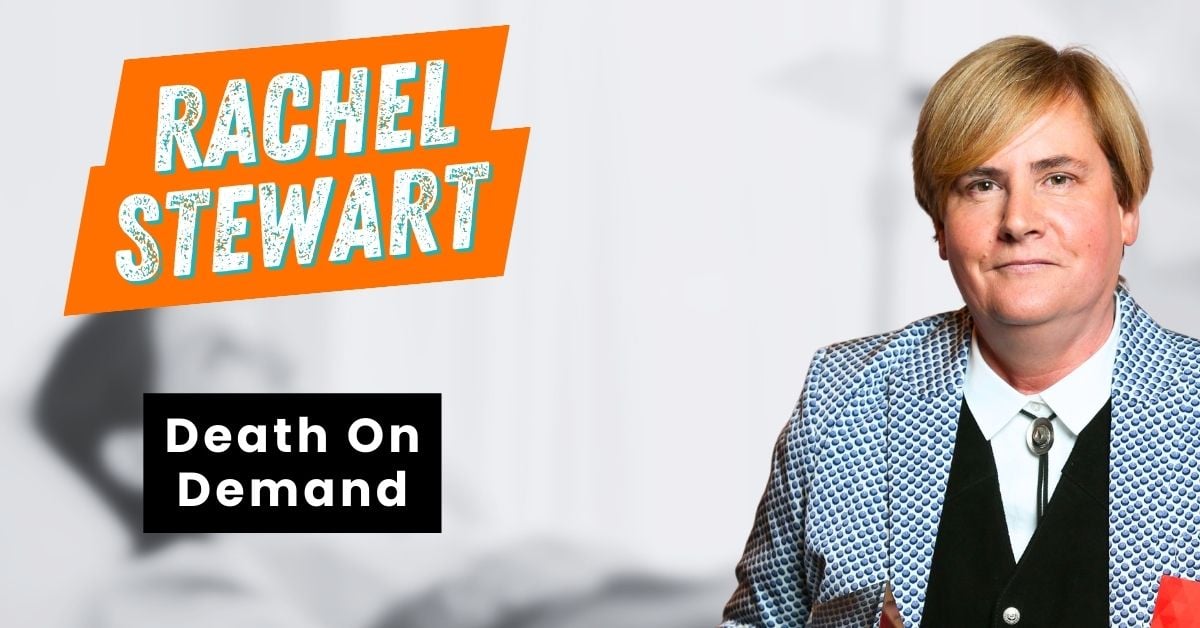
by Rachel Stewart
Heard of MAID? Here’s what AI says about MAID.
Medical Assistance in Dying is a legal process in several countries, including Canada and parts of the US, allowing eligible adults with grievous and irremediable medical conditions to receive assistance from clinicians to end their lives. It involves either self-administering medication or having a clinician administer it to alleviate intolerable suffering.
Except that’s a lie. In Canada at least, and soon to be arriving in a syringe near you, ending your life has become the go-to mechanism for alleviating mental suffering, depression, poverty, homelessness and disabilities.
I voted for David Seymour’s ‘End of Life Choice’ Bill back in the 2020 referendum believing that choice about the timing and method of one’s death was a good thing. And, yes, for interminable suffering from an imminent terminal disease I still support the idea in theory.
BUT, and it’s big BUT, to see the endless watering down of the “safeguards” and infinite reassurances from the proponents of MAID sees me now refusing to offer to point the hose at the slippery slope.
Because that’s what it is. A slippery slope for misuse, control, and industrial-scale death sold as compassion. Why do I see it this way? Let me count the ways.
Back in 2016 when MAID was introduced, Canadians were told by the state that it was only to end the suffering of the terminally ill. A decade later, that’s not the reality. At all. Voluntary euthanasia now accounts for 5 per cent of all deaths there.
In 2021, the condition that death be ‘reasonably foreseeable’ was quietly shelved. Next year will see those with mental health issues included. And the Canadian government is already busy consulting on whether it should include ‘mature minors’ and babies as candidates.
As always, proponents of assisted dying say it’s all good, man. They point to the “falsehoods” around eligibility criteria, the painlessness and ease of death, and the big ‘C’ word – compassion – gets thrown around a lot.
Here’s the ad that went viral in Canada in 2022 espousing the “beauty” in assisted dying. The marketer – Simons fashion – described the ad as “humanistic”.
Death as branding.
Opponents of euthanasia may or may not be religious, but the good ones do the research, get ‘on the ground’ intel, and tend to know right from wrong and bullshit from pure spin.
Take Kelsi Sheren. She is a well-known Canadian combat veteran and author who has emerged as a vocal critic of the expansion of MAID. Her opposition is borne from her experiences and observations regarding how the system treats veterans and other vulnerable groups.
She asserts that veterans and individuals with mental health struggles are being offered death as a treatment option instead of the therapy, recovery, or social support they actually need. One of those options is cheaper for the state, of course.
Sheren joined the Canadian Armed Forces at 18 knowing she might die for her country but has said she never imagined her own government would one day offer to help her do it.
“Behind closed doors, in quiet conversations, veterans are being offered medical assistance in dying not therapy, not recovery, not support, but death,” Sheren said. “When somebody’s drowning in trauma and desperation, that’s not a choice. That’s coercion wearing a polite face.”
I really rate her intellect, her inquiry, and her heart. Here she is on Triggernometry giving a rundown of the unsavoury reality of MAID to the jaw-dropped hosts.
I thoroughly recommend the entire podcast so that you can make up your own mind.
Needless to say, the subject of euthanasia in any country – let alone Canada – is too big to cover here. It’s also extremely fraught. It arouses fiery feeling on both sides.
But what I would say is that clearly there’s a case to be made about the ‘slippery slope’ at the very least, and eugenics at the very worst.
When governments are pushing euthanasia as hard as Canada has, and Britain is currently doing, and New Zealand has done – and here the Bill will be amended again and again -you twig to the fact that it’s not really about people. It’s about money.
And, morally, is euthanasia right or wrong?
I believe that nobody has a right to decide for another person whether their own life is worth living or not, because their physical and psychic pain may be unbearable to the point that it’s of no value to them in that moment, and/or beyond. Sadly.
We generally call that ‘suicide.’ It’s more of an old-fashioned DIY method. And yet society still tends to judge the hell out that.
But when the state’s involved, and at times actively promoting it, it can suddenly morph into a sentiment that it’s “kind” and “safe” somehow.
Given the emerging evidence, I’d have to call it dystopian.
Listen to the full episode of Riding Shotgun.
Our Contributor
