
Your Information is secure and will never be shared without your express permission. You'll also be kept up to date with any related news and information. You can unsubscribe at any time.
Your Information is secure and will never be shared without your express permission. You'll also be kept up to date with any related news and information. You can unsubscribe at any time.
WANTS IT
WANTS IT

WANTS IT

UNCLEAR
UNCLEAR
REJECTS IT

REJECTS IT
Branded as protection. Delivered as surveillance.
New Zealand's newly proposed under-16 social media law is the first nationwide move to normalise identity checks for online access.
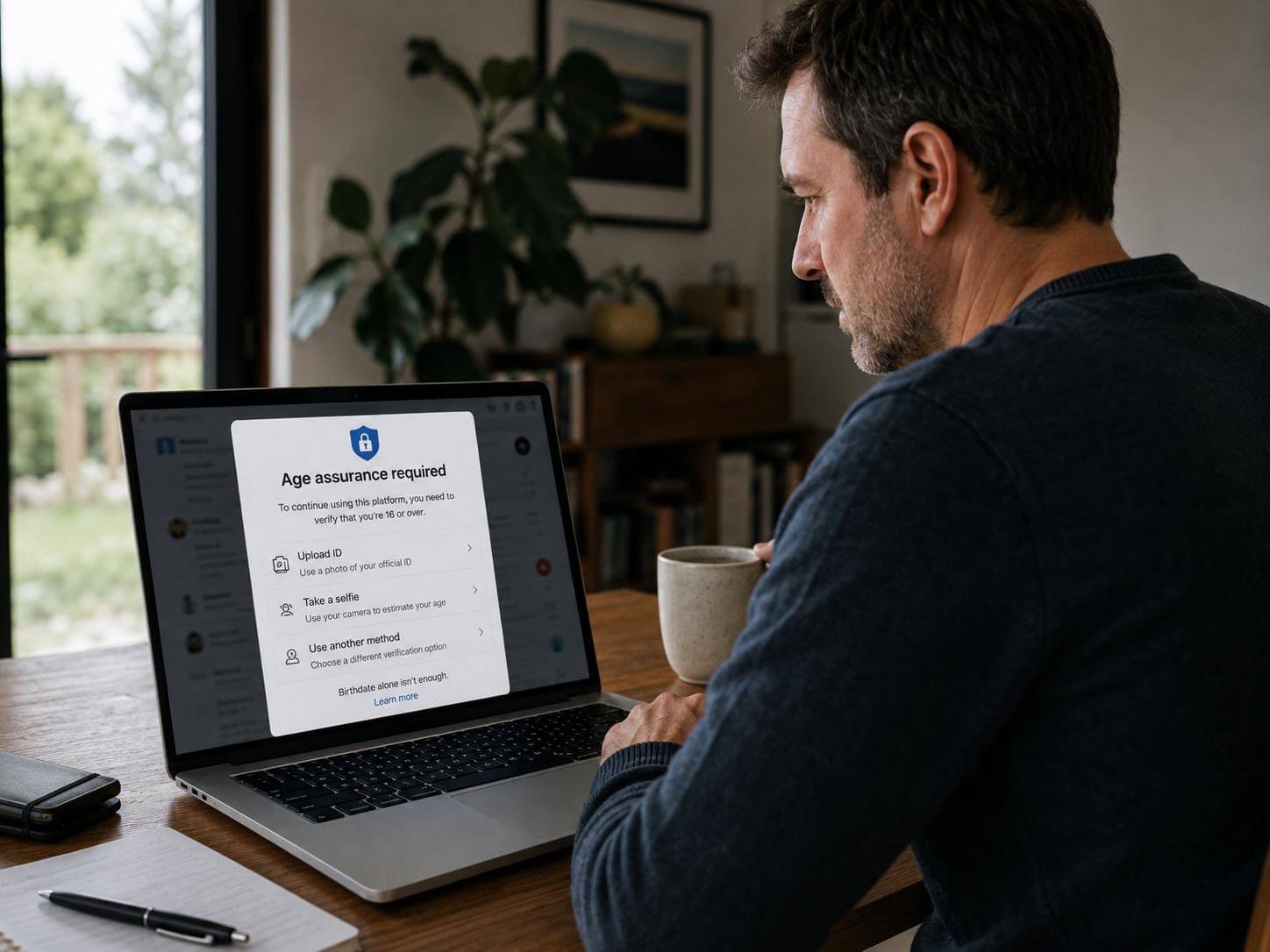
To comply, platforms must take reasonable steps to prevent under-16s from holding accounts. The Bill clearly outlines what age assurance can involve: Digital Identity, formal identification, facial age estimation, biological or behavioural information, and inferences drawn from your account, activity, interactions and device information.
A simple birthdate declaration isn't enough. And these requirements apply to existing accounts as well as new ones.
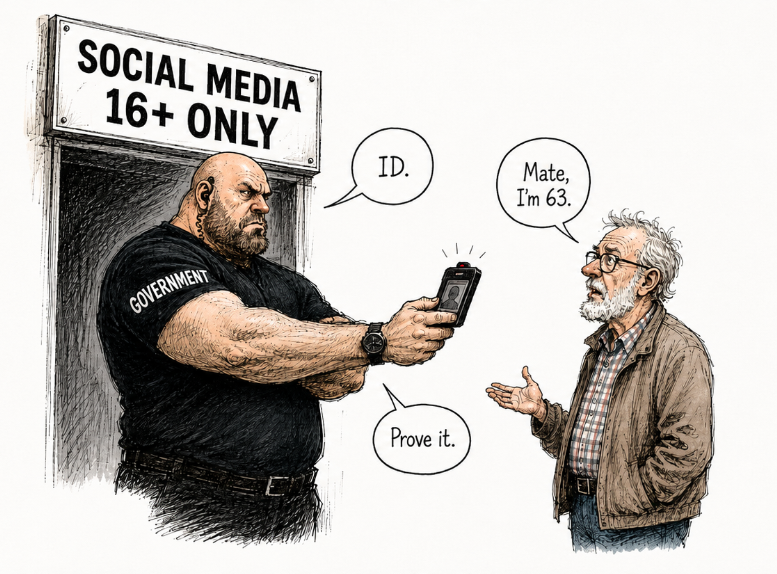
While no single method is mandated, in practice the law creates the conditions to pressure people into accepting increasingly intrusive methods of proving their age — and potentially their identity — simply to participate online.
Today it's Children. Who's Next Tomorrow?
We're told this is to protect children from “online harm,” yet history shows that once the state begins deciding who may access what, the scope expands rapidly. Today it applies to under-16s on social media; tomorrow it could extend to news, forums, or viewpoints deemed “unsafe.”
Child safety measures are simply the first domino in a wider identity-verification regime — one that treats ordinary people as suspects who must prove who they are just to participate online.
The implications for privacy, security, anonymity and personal freedom are profound.
Instead of simply empowering parents to guide their own children, they're introducing a blunt, top-down mandate that shifts control away from families over to the state, replacing parental responsibility with government permission.
Your Face isn't a password
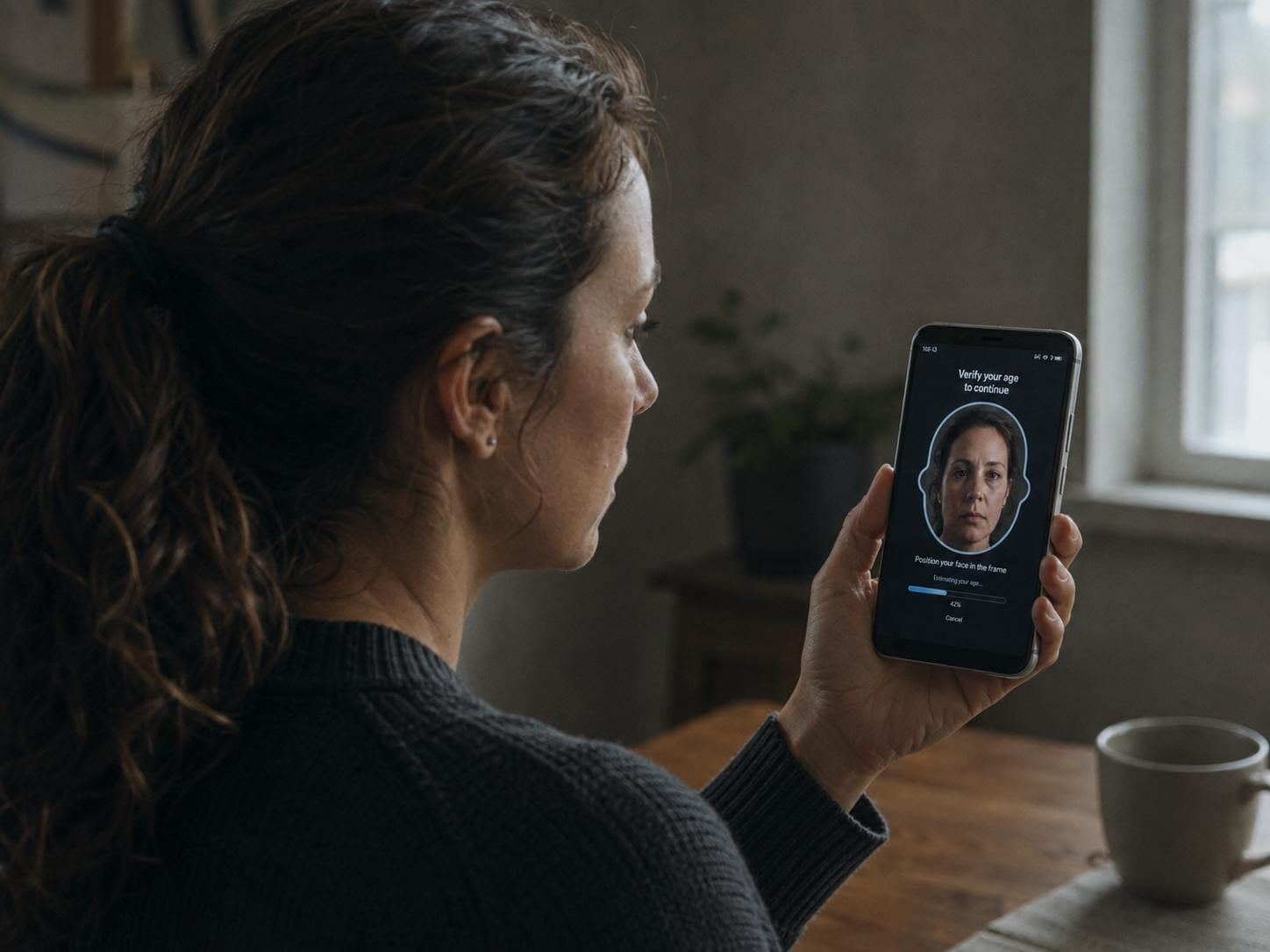
Equally alarming is the role biometrics can play. The Bill expressly provides for facial age estimation and other biological or behavioural methods of estimating age.
Your face, voice, fingerprints and other biometric characteristics are fundamentally different from a password. You can change a password. You can't change your face. The greater the role biometrics play in everyday digital access, the greater the consequences when those systems fail, are misused or are compromised.
From connectedness to control
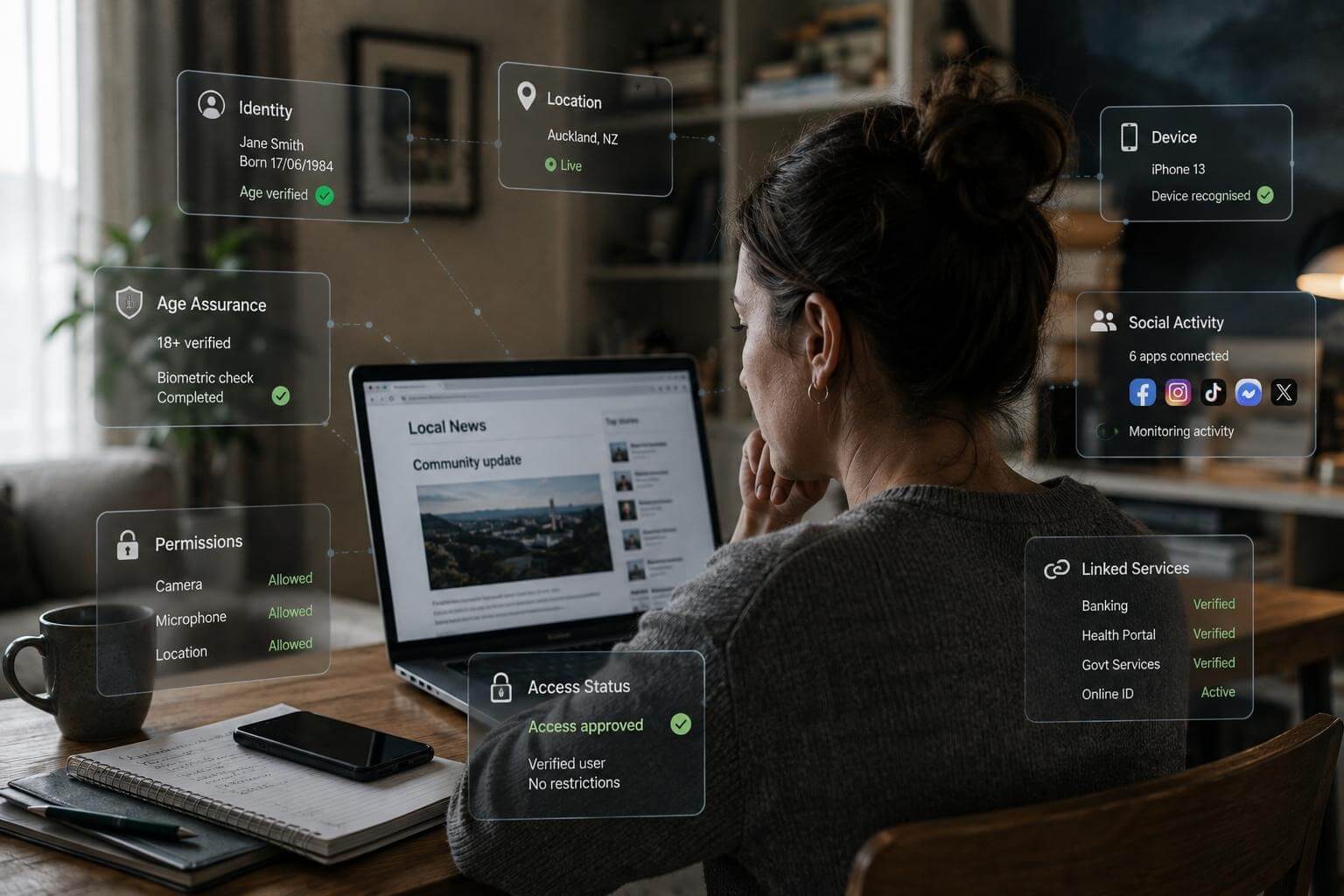
What's more, identity and verification systems don't necessarily stay confined to the purpose for which they were first introduced. Once the infrastructure exists, it can be connected across more services, expanded to new purposes and embedded into more areas of everyday life.
Each new connection makes it possible to build a more complete picture of the individual behind the screen — connecting who you are with what you do, where you do it, and ultimately what you're permitted to access.
And that's the bigger issue.
It's not really about whether our lives become more “digital”. They already are. It's about whether identification, surveillance and profiling become the price we all pay for being online.
Branded as protection. Delivered as surveillance.
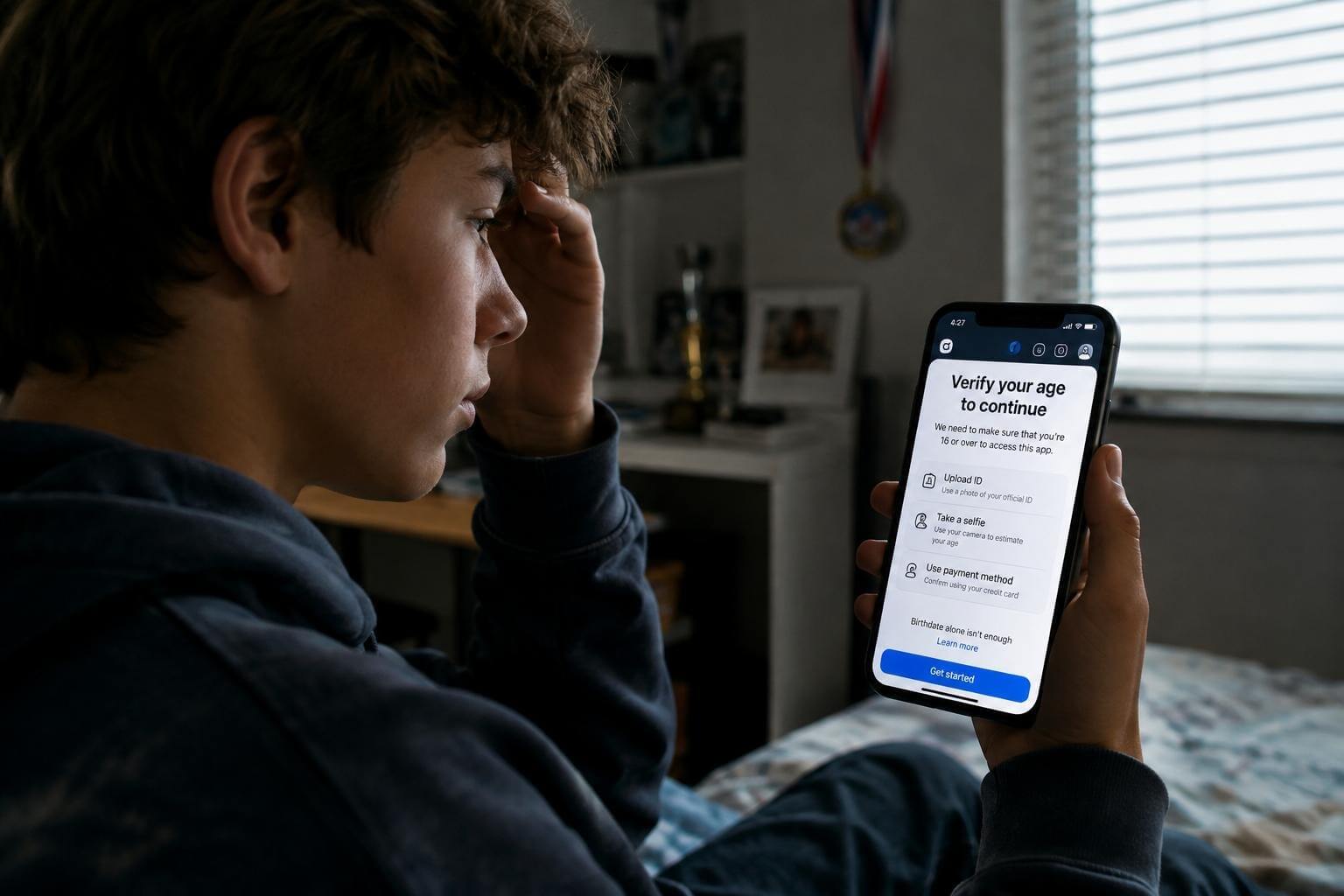
New Zealand's newly proposed under-16 social media law is the first nationwide move to normalise identity checks for online access.
To comply, platforms must take reasonable steps to prevent under-16s from holding accounts. The Bill clearly outlines what age assurance can involve: Digital Identity, formal identification, facial age estimation, biological or behavioural information, and inferences drawn from your account, activity, interactions and device information.
A simple birthdate declaration isn't enough. And these requirements apply to existing accounts as well as new ones.
While no single method is mandated, in practice the law creates the conditions to pressure people into accepting increasingly intrusive methods of proving their age — and potentially their identity — simply to participate online.
Today it's Children. Who's Next Tomorrow?
We're told this is to protect children from “online harm,” yet history shows that once the state begins deciding who may access what, the scope expands rapidly. Today it applies to under-16s on social media; tomorrow it could extend to news, forums, or viewpoints deemed “unsafe.”
Child safety measures are simply the first domino in a wider identity-verification regime — one that treats ordinary people as suspects who must prove who they are just to participate online.
The implications for privacy, security, anonymity and personal freedom are profound.
Instead of simply empowering parents to guide their own children, they're introducing a blunt, top-down mandate that shifts control away from families over to the state, replacing parental responsibility with government permission.
Your Face isn't a password
Equally alarming is the role biometrics can play. The Bill expressly provides for facial age estimation and other biological or behavioural methods of estimating age.
Your face, voice, fingerprints and other biometric characteristics are fundamentally different from a password. You can change a password. You can't change your face. The greater the role biometrics play in everyday digital access, the greater the consequences when those systems fail, are misused or are compromised.
From connectedness to control
What's more, identity and verification systems don't necessarily stay confined to the purpose for which they were first introduced. Once the infrastructure exists, it can be connected across more services, expanded to new purposes and embedded into more areas of everyday life.
Each new connection makes it possible to build a more complete picture of the individual behind the screen — connecting who you are with what you do, where you do it, and ultimately what you're permitted to access.
And that's the bigger issue.
It's not really about whether our lives become more “digital”. They already are. It's about whether identification, surveillance and profiling become the price we all pay for being online.
Your Information is secure and will never be shared without your express permission. You'll also be kept up to date with any related news and information. You can unsubscribe at any time.
Demand The Better Way.
Add your voice to call on Parliament to reject the Under-16 Social Media Ban and adopt solutions that protect children without sacrificing our rights.
Your Information is secure and will never be shared without your express permission. You'll also be kept up to date with any related news and information. You can unsubscribe at any time.
The Bill allows age assurance using facial age estimation, Digital Identity, formal ID, behavioural information and data inferred from your online activity.
Protecting kids matters. Building an age-verification system for everyone is another matter entirely.
Your Information is secure and will never be shared without your express permission. You'll also be kept up to date with any related news and information. You can unsubscribe at any time.
This isn't happening in isolation.
The proposed social media restrictions arrive at the same time New Zealand is expanding Digital Identity and other systems designed to establish who we are, what attributes we hold and what we are permitted to access online.
Watch Judith Collins say the quiet part out loud…
Branded as protection. Delivered as surveillance.
To comply, platforms must take reasonable steps to prevent under-16s from holding accounts. And the Bill itself tells us what age assurance can involve: Digital Identity, formal identification, facial age estimation, biological or behavioural information, and inferences drawn from your account, activity, interactions and device information.
A simple birthdate declaration isn't enough. And these requirements apply to existing accounts as well as new ones.
While no single method is mandated, in practice the law creates the conditions to pressure people into accepting increasingly intrusive methods of proving their age — and potentially their identity — simply to participate online.
Today it's Children.
What About Tomorrow?
We're told this is to protect children from “online harm,” yet history shows that once the state begins deciding who may access what, the scope expands rapidly. Today it applies to under-16s on social media; tomorrow it could extend to news, forums, or viewpoints deemed “unsafe.”
Child safety measures are simply the first domino in a wider identity-verification regime — one that treats ordinary people as suspects who must prove who they are just to participate online.
The implications for privacy, security, anonymity and personal freedom are profound.
Instead of simply empowering parents to guide their own children, they're introducing a blunt, top-down mandate that shifts control away from families over to the state, replacing parental responsibility with government permission.
Equally alarming is the role biometrics can play. The Bill expressly provides for facial age estimation and other biological or behavioural methods of estimating age.
Your face, voice, fingerprints and other biometric characteristics are fundamentally different from a password. You can change a password. You can't change your face. The greater the role biometrics play in everyday digital access, the greater the consequences when those systems fail, are misused or are compromised.
What's more, identity and verification systems don't necessarily stay confined to the purpose for which they were first introduced. Once the infrastructure exists, it can be connected across more services, expanded to new purposes and embedded into more areas of everyday life.
Each new connection makes it possible to build a more complete picture of the individual behind the screen — connecting who you are with what you do, where you do it, and ultimately what you're permitted to access.
And that's the bigger issue.
It's not really about whether our lives become more “digital”. They already are. It's about whether identification, surveillance and profiling become the price we all pay for being online.
A New Zealand Digital Bill of Rights
Human rights do not disappear because life becomes digital.
Technology is changing how we work, communicate, bank, learn, access services and interact with government.
Those changes can bring real benefits. But they also create new ways to collect information, identify people, monitor behaviour and control access.
We believe New Zealand should set the boundaries before these systems become embedded into everyday life.
A New Zealand Digital Bill of Rights would establish clear principles protecting freedom, dignity, privacy, choice and human autonomy in the digital age.
Technology should serve people, not control them.
The full proposal sets out fourteen fundamental digital rights, together with safeguards designed to ensure that restrictions on those rights must be justified, necessary, proportionate and subject to proper scrutiny.
We’re not asking you to sign another petition saying what you don’t want.

We’re asking New Zealanders to stand behind a clear alternative.
By adding your name, you are calling on Parliament to:
- REJECT THE ONLINE SAFETY BILL IN ITS CURRENT FORM.
- ADOPT A NEW ZEALAND DIGITAL BILL OF RIGHTS.
WHAT YOU ARE SUPPORTING
I call on Parliament to reject legislation that makes mass age assurance a condition of ordinary online participation, and to enact a New Zealand Digital Bill of Rights protecting privacy, anonymity, freedom of expression, voluntary Digital Identity, biometric integrity and freedom from unreasonable digital surveillance.
Visible public support matters.
It gives MPs who oppose the legislation something concrete to point to. It shows Parliament that New Zealanders support protecting children online without surrendering the digital rights of everyone else.
And it puts forward something more useful than another protest against another Bill:
a clear standard for what New Zealanders believe should be protected.