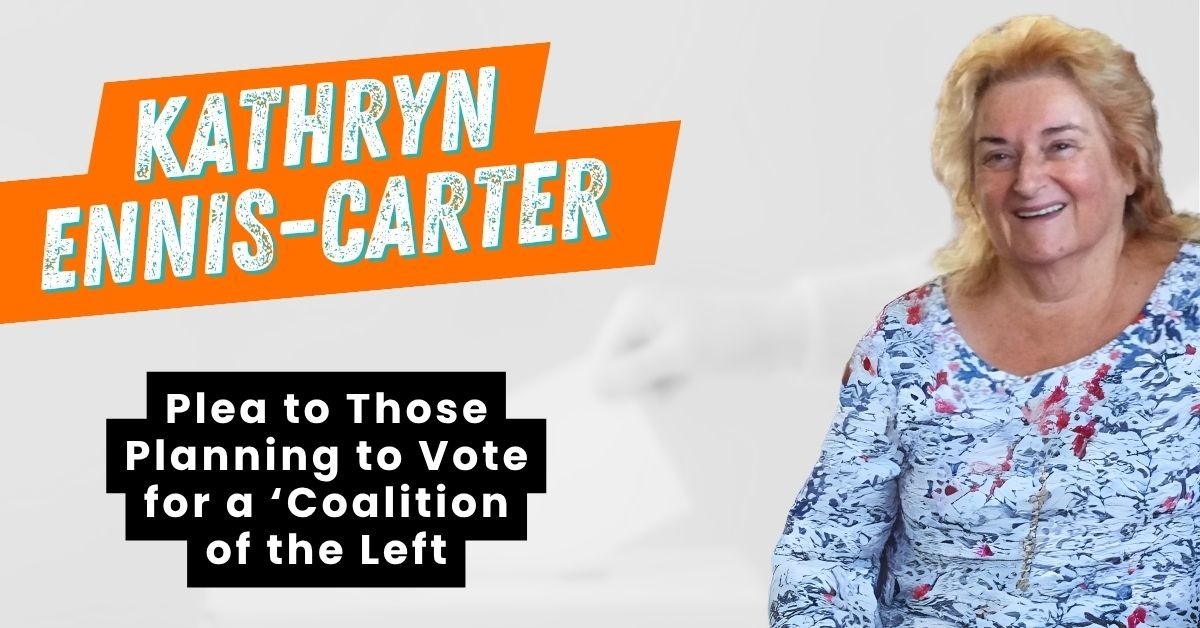
by Kathryn Ennis-Carter
Today I am thinking about my dear friends who will vote for the Coalition of the Left on Election Day, 7 November.
In other words, they’re going to vote for Labour, Greens, the Maori Party or TOP.
Mostly, these are well-intentioned ‘socially conscious’ people who care about society and the various social needs they see around them.
They have a ‘left of centre’ view of the world and think that the current (2023-26) coalition Government has not done enough about those things and is intrinsically bad anyway, because anything labelled ‘right-wing’ is bad.
Unfortunately, they, like most New Zealanders, know very little about the realities of public sector governance and management.
Because I have been in and around government for 41 years, in New Zealand and, for the last 20+ years, internationally, I can legitimately claim to know a thing or two about government. And I’ve certainly learned a lot from working with governments in other countries, seeing firsthand how various governance systems work, who pulls the strings and who benefits and then returning home to observe and analyse anew what New Zealand’s version of that is.
So I’m writing to explain some of what I know about government, and I hope my friends will read it.
I’ve presented it as a basic list of things I know most people don’t know.
Key Things to Understand When Considering Your Vote
The first thing to understand is that ‘left’ and ‘right’ don’t exist in the form they did even 30 years ago. There has been a huge change in the nature, purpose and form of what used to be called ‘left’ and ‘right’.
In fact, the same global interests prevail, and the playing out of those interests, along with the propaganda associated with them, dominates on both the so-called ‘left’ and ‘right’ of the political spectrum, taking different forms each way.
So for example, it’s very clear now that the Labour Party is no longer the party that represents ‘working class’ people and the Greens are no longer a party that is concerned about the environment.
I’ve continued to use the term ‘Left’ or ‘Left of centre’ in what follows, for want of better labels,
The second key thing to understand is that most people with a ‘left of centre’ orientation operate from the perspective that the government has a sort of bottomless pit of funds through taxes, and that those funds should be directed to every social cause where they see a need.
The argument that tax funds should be directed to those causes because the people who need them are the same people who are paying them is quite persuasive – although a bit misleading on the ‘who pays them’ side of the ledger.
Unfortunately, that perspective means people with that view don’t have much of a grasp of the fiscal reality of government.
That is not the fault of ordinary people in having that view.
It happens because of:
- A general failure of our education system. The curriculum does not include Civics in any meaningful way, and kids emerge from school not really understanding how government actually works. For example, most people could not tell you what the three branches of government are. This results in a situation where people conclude that ‘politics’ is not really anything to do with them and switch off, while the reverse is true: government controls every aspect of our lives – so we need to wake up and take notice;
- Politicians talk in rhetoric, platitudes and slogans and the general public are not well set up to discern the wood from the trees, or the lies from the truth; and
- Most people have no idea where their tax dollars are actually being spent.
The cumulative lack of knowledge arising from the three factors above means that people are voting with only a tiny amount of knowledge about what their government is actually doing.
For example, most people don’t know how to read and understand the Government Budget Estimates. I do.
And now we start getting into the important details.
The third key point is that people need to understand that, for any government anywhere, fiscal reality operates through three tipping points that signal when a country/government is approaching a ruinous fiscal crisis. These are:
- When a government is raising taxes to pay for the increasing cost of (keeping up with interest payments on) its borrowing;
- When the cost of welfare/social programmes the government is paying for outstrips the country’s productive capacity to pay for them;
- When a government has run out of almost all sources of revenue except taxes, fees and charges for services and thus has nowhere to turn to spread the impact of its spending except on the taxpaying public. (In New Zealand we’ve got to that point because almost every public asset that generated revenue has been systematically sold off in asset sales over the last few decades, because of the neo-classical – Chicago school – economics dogma that has prevailed.)
Because of the fact that I’ve spent 30+ years advising on public financial management, I know that New Zealand is at the point of fiscal crisis on all three ‘tipping points’ above, or that we are close to the edge of the cliff.
The fourth key thing to understand is that prudent fiscal management of the public sector relies on four things:
- Carrying out the functions of core government and core public services with clear sight on priorities, and with as much efficiency as possible;
- Reducing debt and keeping the level of debt repayment manageable and under control;
- Reducing overhead costs (the built-in ‘corporate’ costs of running the public service, the Parliament and the judiciary);
- Controlling discretionary spending (i.e., non-essential projects/programmes that go beyond core government services and essential welfare).
And this is where the rubber hits the road.
The cry from the Left that the current Government isn’t addressing a range of social needs – and viewing that with the perspective that they are a mean ‘right-wing’ government that’s only interested in ‘capitalism’ and the rich, that they are not upholding Te Tiriti or whatever – is completely futile.
Why? Because we are wandering around in a situation of fiscal crisis and ALL FOUR THINGS above are out of whack.
So regardless of who becomes the Government on election night, these four things will have to be addressed; otherwise, as a country we are going to fall into the abyss.
Who is to blame for the above?
Answer – every successive government since the 1980s.
All Labour-led and all National-led governments have done the same thing, with the same kind of policies and the same kind of excess – that is, systematically selling off public assets to private sector interests so eventually there’s nothing left that generates revenue for government except tax, not being rigorous in ensuring government-provided services are as efficient as possible, not controlling the corporate overheads of government, and escalating all kinds of non-essential discretionary spending.
The worst thing that those on the ‘Left’ should really be angry about is that over the last 40 or so years, spending on all the core aspects of our basic ‘welfare’ system has been reduced or neglected in favour of all kinds of discretionary alternatives – most of which have led to more bureaucracy and poor social outcomes.
Spending on things that are at the core of what used to be our “welfare state,” which was the envy of many other countries, was once intended to provide a ‘quality of life’ benefit for all ordinary New Zealanders.
These include health services, education, housing and ensuring good employment and wages.
These are the things that take people OUT of poverty.
But funds have been taken out of those core areas of general social provision, and put into alternatives that have just led to diverting the bureaucracy from core priorities, more spending on the bureaucracy itself, and diverting funds into a whole range of ‘ideological’ programmes.
All of this has not led to social outcomes that have made any real difference.
Spending on things like setting up a Maori Health Authority instead of providing more hospitals and better hospital services across the board; turning the school curriculum into ideological indoctrination rather than putting funds into ensuring the academic achievement levels that kids need for a quality-of-life future; getting the medical establishment preoccupied with compliance bureaucracy to ensure protection for anyone who might be offended about their cultural rights, trans rights etc; spending billions on addressing ‘climate change’ through a tortuous bureaucracy of commissions and working groups, the ETS system and billions that NZ is giving to other countries to support their ‘climate change’ initiatives.
Nothing from this kind of discretionary government spending is generating outcomes that make any difference to the socio-economic situation of most New Zealanders.
And dare I say it – neither will the ongoing tidal wave of funds that has flowed into iwi Trust Boards and Maori organisations over the last 40 years.
Most people think that the latter is about Treaty settlements, which are about righting fundamental grievances, and also about things like better Maori representation. But it’s way beyond that, and many Maori activists are deliberately disingenuous when they claim that Treaty settlements represent only about $2+ billion in direct payouts.
In fact, billions of government funding goes out annually in this cause – part of it on direct payments to iwi and Maori organisations (via a whole range of government departments) and the rest on maintaining the bureaucracy that supports the whole “Maori sector”.
And yet the socio-economic statistics for Maori have not changed much.
So When You Vote
So, to my friends who are thinking about voting for another Government of the Left. When you vote – think about the above.
Most people are supportive of all kinds of government interventions/programmes on social needs – until they know what the price tag is and what the consequences are of funding going to certain things and not other things.
Think about the package of increased taxes that will be dished up by the Left parties – Labour, Greens, Maori Party and TOP. They are signalling increased income tax, land tax, capital gains tax, wealth tax, inheritance tax. And think about who will be affected by that, and where those tax funds will be directed.
And think about the last Government of the Left that we had – Jacinda Ardern’s Government, which almost bankrupted New Zealand with exploits like its excessive Covid Response, including recklessly borrowing another $60 BILLION for that purpose alone, which is a millstone around all our necks for decades to come
Governments around the world can be affected by external events that create political and fiscal shocks. But how well we can weather those depends entirely on the extent of prudent fiscal governance and public management that has gone before.
Due to the failures of successive New Zealand governments, particularly the Ardern government, our country is not currently in a good position to respond effectively.
And think about the basic fact that no government can tax their way out of a fiscal crisis that has been generated largely by not focusing on the priority and efficiency of core government services and who benefits from that; excessive borrowing; not keeping public service expansion of bureaucracy and corporate overheads under control; and throwing billions of funds away every year on misdirected discretionary spending.
Have a serious think about which political parties and which coalition groupings are going to do better on PRUDENT FISCAL GOVERNANCE AND PUBLIC MANAGEMENT.
It’s important – because all our futures and that of our kids and grand-kids depend on it.
Our Contributor
