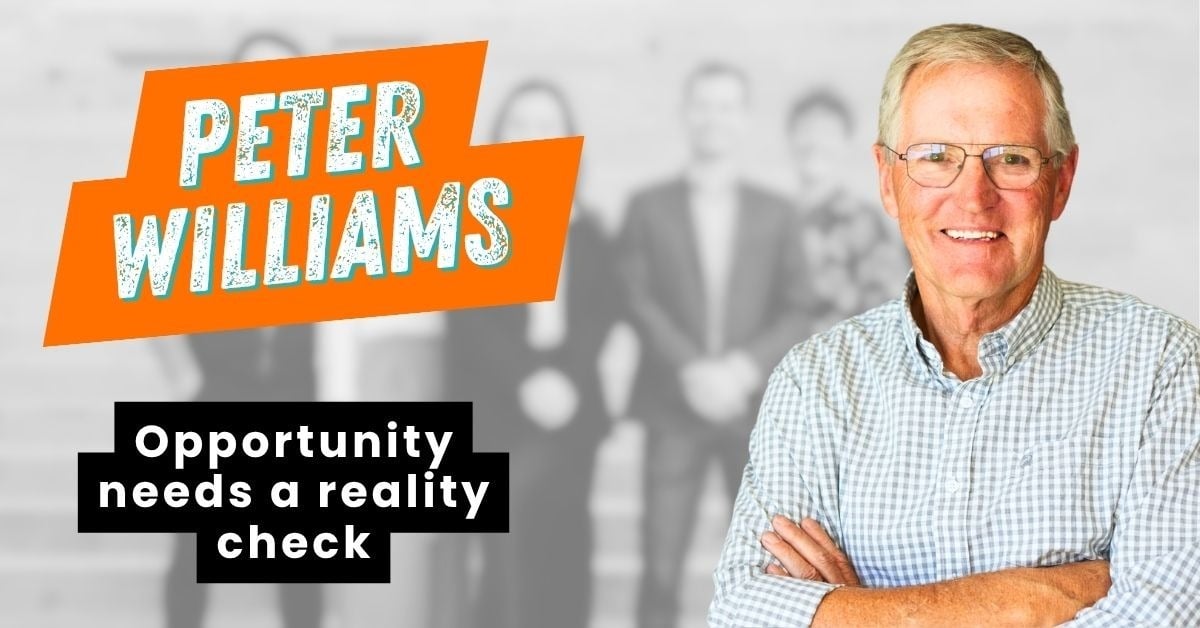
by Peter Williams
We can all start voting on Monday, but the perennially offended among us just keep on finding things to whinge about. Apparently, a public holiday means it’s an inconvenient day to cast a vote.
Just like all the complaining about how closing off the enrolment period at midnight this Sunday is “an affront to democracy,” you sometimes worry about the intelligence of people on the left side of politics.
If I were Chris Hipkins, I’d be using the name of Monday’s holiday as a real push to get people to go out and vote for them.
I mean, how much better can it be than getting people to vote Labour on Labour Day. Or have the campaign marketing boffins not figured that one out yet? You don’t hear National supporters complaining that they don’t have a public holiday named for them!
National must have felt a lot better though after the 1 News Verian poll came out on Tuesday night with their party vote number up to 32%. But that came just hours after the Post – Freshwater poll had them at 27.6. One of those polls is wrong, and based on the trends of recent weeks, I’d punt on the 1 News poll being wrong. The Nats haven’t been above 30% in any poll since September, although Roy Morgan has had them on either 30 or 31 since August.
The news, though, is all bad for Labour, no matter which poll you look at. They might have been ahead of the Nats in the Post-Freshwater poll Tuesday morning by 28.7 to 27.6, but by six o’clock they were trailing the Nats 32 to 27. No matter where you look, Labour is a party of the high twenties, and having their lunch eaten by the Greens, who are consistently in the 14% to 16% range.
Act and NZ First together get around 20% in pretty much every poll; the Maori Party electorate-only strategy will get them probably three, possibly four seats, and then it’s Opportunity looking almost certain to get between 5% and 8%, yet not being invited by Chris Luxon to join a government.
A few points to note about the Maori seats. Labour will win Ikaroa-Rawhiti, which they currently hold. They will win Te Tai Tonga, the seat including some of Wellington and all the South Island, and either the Greens or Labour will win Te Tai Tokerau in the north. The Maori Party leaders Rawiri Waititi and Debbie Ngarewa-Packer will win their seats, and Hannah-Rawhiti Maipi-Clarke will keep Tainui.
The close contest is in Auckland, in Tamaki-Makaurau, where the Mongrel Mob lover Orinii Kaipara has a slender lead over Kerrin Leoni of Labour. What that means is that the Maori Party, if they only have three MPs, will create an overhang of just two, meaning 62 seats are needed for a majority.
The centre can still win if National get up to 40 electorates – still not beyond the realm of possibility – and if the Act – NZ First vote can move to 21% or 22% and therefore collect 25 or 26 MPs to get a slender majority for the right.
With early voting only a few days from starting, perhaps it’s time to have a much closer look at Opportunity, who in pretty much every poll these days are being cast in the role of government decider.
They could have up to 10 MPs, so let’s have a look at who that 10 might be. There are six women and four men in their top 10, two Maori, and five born outside New Zealand.
We know plenty about Quilae Wong because she’s pretty much the only Opportunity person seen in public. She reckons she won’t push hard, for now, on their land tax and citizens' income ideas. Remember those policies. They lie at the heart of the party’s ideology. They’re both Marxist ideas of redistribution.
Number two is Daniel Eb, who wants to transition Aotearoa to a just, regenerative food system. Whatever that means. He’s also the son of PR queen Deborah Pead who has no doubt played a strong role in writing the word-salad biographies of the Opportunity candidates.
Wellington public servant Jessica Hammond is next. She’s the great Opportunity survivor. This is her fourth go at getting into parliament.
At number four is Kayla Kingdon-Bebb, a Canadian who says she’s an expert in Treaty law and was a co-writer of He Puapua.
Eden Skipper is the top South Islander on the list. He’s involved with his marae on Banks Peninsula and works as a researcher on alternative economic futures at Canterbury University.
Jodie Kuntzch, an immigrant but not saying from where, has worked at the intersection of industry, innovation and sustainability. She’s number six.
Sarah Lucas from New Plymouth used to be a social worker and mental health worker. Now she owns a small business and is a manufacturer, although it doesn’t say what.
Dave Bainbridge-Zafar is a pom; he’s been here permanently for nice years, has an MBA in infrastructure management and currently works for the Gore District Council, although he lives in Dunedin. Dave is number eight.
Then there’s Holly Knill from the North Shore who has “led growth and production in fast-changing industries,” and at number 10 is Papa Wharewera from Whakatane, ex-military, another small business owner and one-time provincial rugby player.
So that’s who you might get from the Opportunity Party.
There is some decent real-life experience there, but their bottom lines to join a coalition are seriously wishy-washy. Policies such as “bringing prices down” or “cleaning up politics” suggest a political utopia that’s never been discovered. I think these people are in need of some reality.
But they’re all photogenic, educated and feature on an easy-to-read website. Their campaign is being well managed, with no one apart from Quilae Wong and Daniel Eb making any significant public appearances. They’re winning the public over because a decent chunk of voters are just attracted to something new and photogenic, without reading what’s on the tin.
Just remember if you’re tempted by the pretty pictures, they want to tax landowners and give money away to people who don’t need it. That’s not a policy for economic growth – anywhere.
This election is coming down to the lesser of two evils, but having a bunch of political rookies from Opportunity in government falls well short of ideal, especially when there’s already been tension with one of their potential colleague parties, the Greens.
The centre-right option has many, many faults, but with economic growth finally starting to gather some momentum, we’d be crazy to put the brakes on – the way that Labour, the Greens and Opportunity want to.
And check out VoteSmart2026.co.nz
Our Contributor
