
by Bonnie Flaws
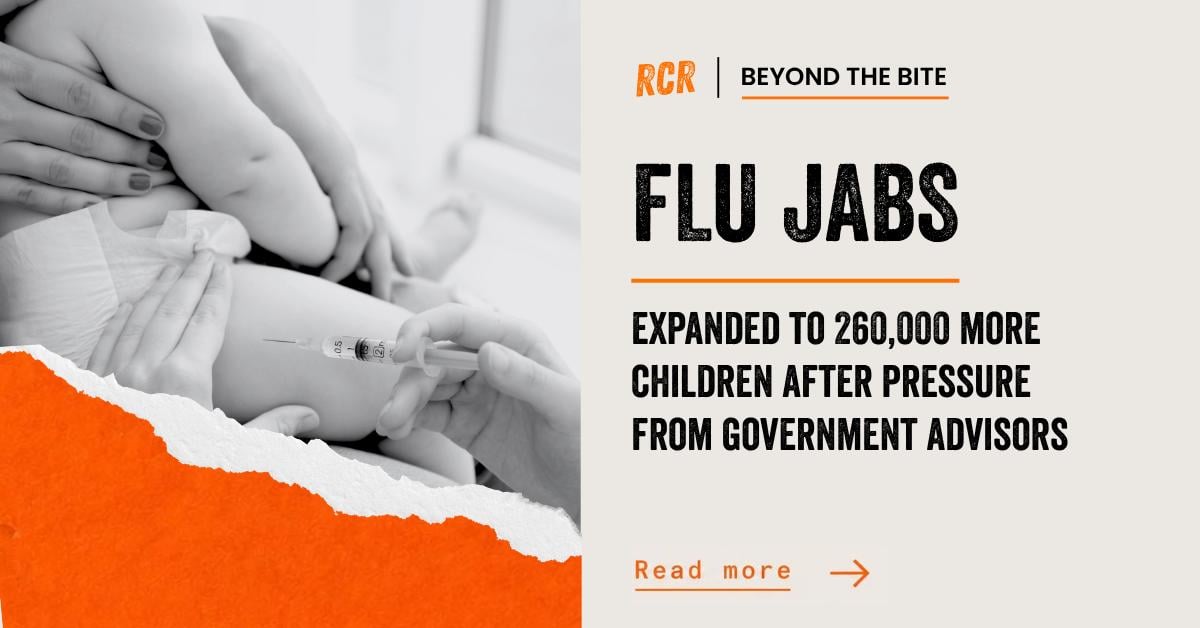
Pharmac has announced it will fund flu vaccines for every Kiwi aged six months to four years from April 2027, adding about 260,000 children to the taxpayer-funded programme. The expansion comes three months after the funding was first considered by Pharmac.
The exact number of under-fives hospitalised with flu-like illnesses was not reported, but the New Zealand Institute for Public Health and Forensic Science (PHF Science) data for the week to 16 August showed there was a spike (75 per 100,000) in under-fives in hospital with severe respiratory illnesses. The underlying surveillance covers Auckland City/Starship and Middlemore/Kidz First, so it isn't a national count of every under-five hospitalisation.
On Wednesday, the National Immunisation Technical Advisory Group (NITAG) said it would call on Pharmac to make the flu vaccine free for young children, due to “soaring” hospitalisation rates for under-fives with flu-like illnesses, with many of them in intensive care. The funding was announced later the same day.
Presently, free flu vaccines for this age group are targeted at children considered at “greater risk,” including those who have been hospitalised for “respiratory illness” or have a history of significant respiratory illness.
Pharmac’s announcement did not provide a breakdown showing how many recent hospitalisations of under-fives were laboratory-confirmed influenza, nor was the total cost of extending the taxpayer-funded programme disclosed. However, NITAG chair and GP Mamaeroa David said Maori and Pasifika children were bearing the brunt. She told RNZ's Morning Report that some under-fives were ending up in intensive care, but did not clarify how many.
“It's a nightmare. I haven't felt this uncomfortable since 2019 and the measles outbreak, and that's including Covid,” she said.
Questions also remain about the extent of long-term safety data in very young children. Flucelvax was approved in the US for children from six months of age in 2021. The pivotal trial supporting that expansion monitored serious adverse events for six months after vaccination, rather than following children for several years and therefore cannot answer questions about health outcomes emerging years after repeated annual vaccination.
The current funded vaccine costs $12 per dose, although a confidential rebate means the actual price paid could be lower. Pharmac also previously said it was unable to fund the expansion. Flucelvax is produced by CSL Seqirus, part of Australian pharmaceutical giant CSL Limited. CSL’s disclosed substantial shareholders include global asset managers State Street, BlackRock and Vanguard, which collectively hold interests of about 20% of the company.
Our Contributor
