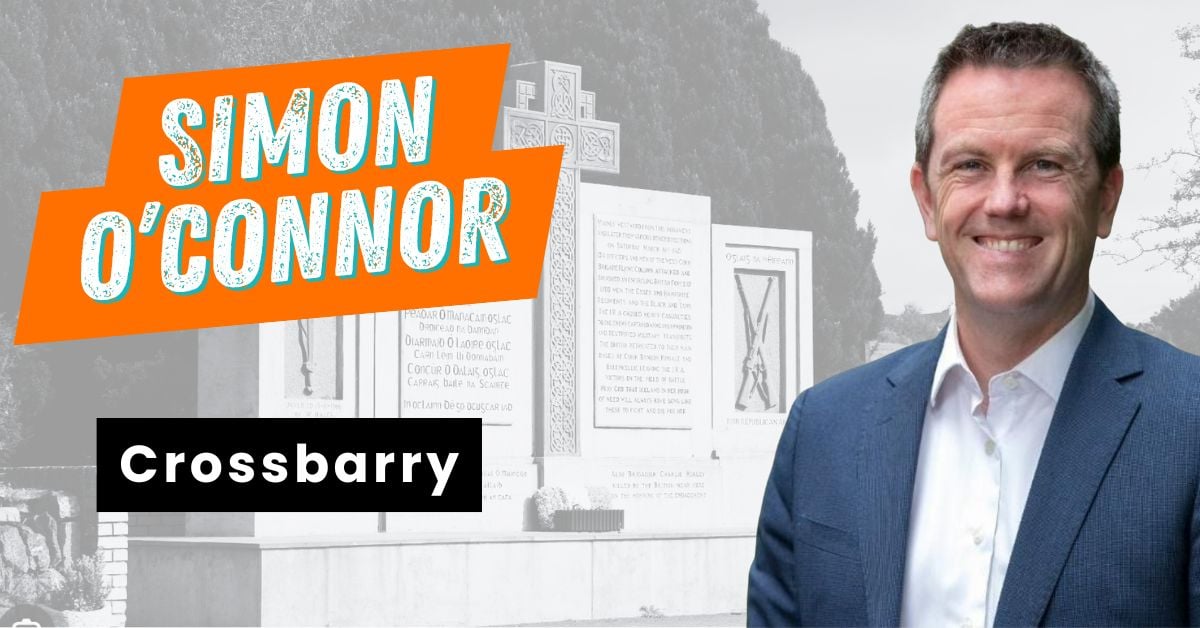
by Simon O'Connor
My father’s side of the family is Irish and proudly so. I am actually an Irish citizen – and before anyone freaks out that my time in Parliament was illegitimate, I am also a New Zealand citizen.
Ironically, up until a few months ago, I have actually never been to Ireland and so a recent visit held deep meaning for me. It was also quite charming to be ‘welcomed home’ as I flew into Dublin!
As I retraced his footsteps, Rachel and I stopped at the Crossbarry ambush memorial. This is the site of arguably the largest engagement of the Irish War of Independence. As I sat for a long while looking at the memorial and knowing my grandfather fought here, I felt a sense of pride but also a degree of questioning. It is to that questioning that this Substack addresses.

The Crossbarry ambush memorial in County Cork, Ireland
As I wrote, I felt pride in my grandfather’s service and having being part of this battle. But as we left and drove east to Castlemartyr, the philosopher in me began asking questions – probably to the annoyance of Rachel.
Why was I feeling pride at his service? One can think of other people and wars where someone might not be happy to be associated with a loved one. In fact, we can think of some modern wars that if a loved one was fighting, you would not be particularly happy.
Should someone be proud of participating in act of violence? Does violence as part of a war of independence make it somehow different? Had my grandfather been fighting on the British side, would I also have been proud? This ambush was an IRA victory, and so does that impact on the emotions as well – how might I have felt had he fought and lost? Is pride also linked to his survival, or would pride still be felt if he fell in battle?
The Crossbarry ambush happened in March 1921, about 60km east of Bantry. My grandfather was one of around 100 Irish Republican Army volunteers, ambushing approximately 1,300 British and auxiliary troops. He was part of the 3rd Cork Brigade under the famous (in Irish circles) Tom Barry. Put simply, a motorised column of British vehicles and troops got caught in an exposed position, near Crossbarry, and subsequently defeated. Around ten British died and five wounded, with the IRA’s losses unclear but it’s put between three and six dead, and three wounded.
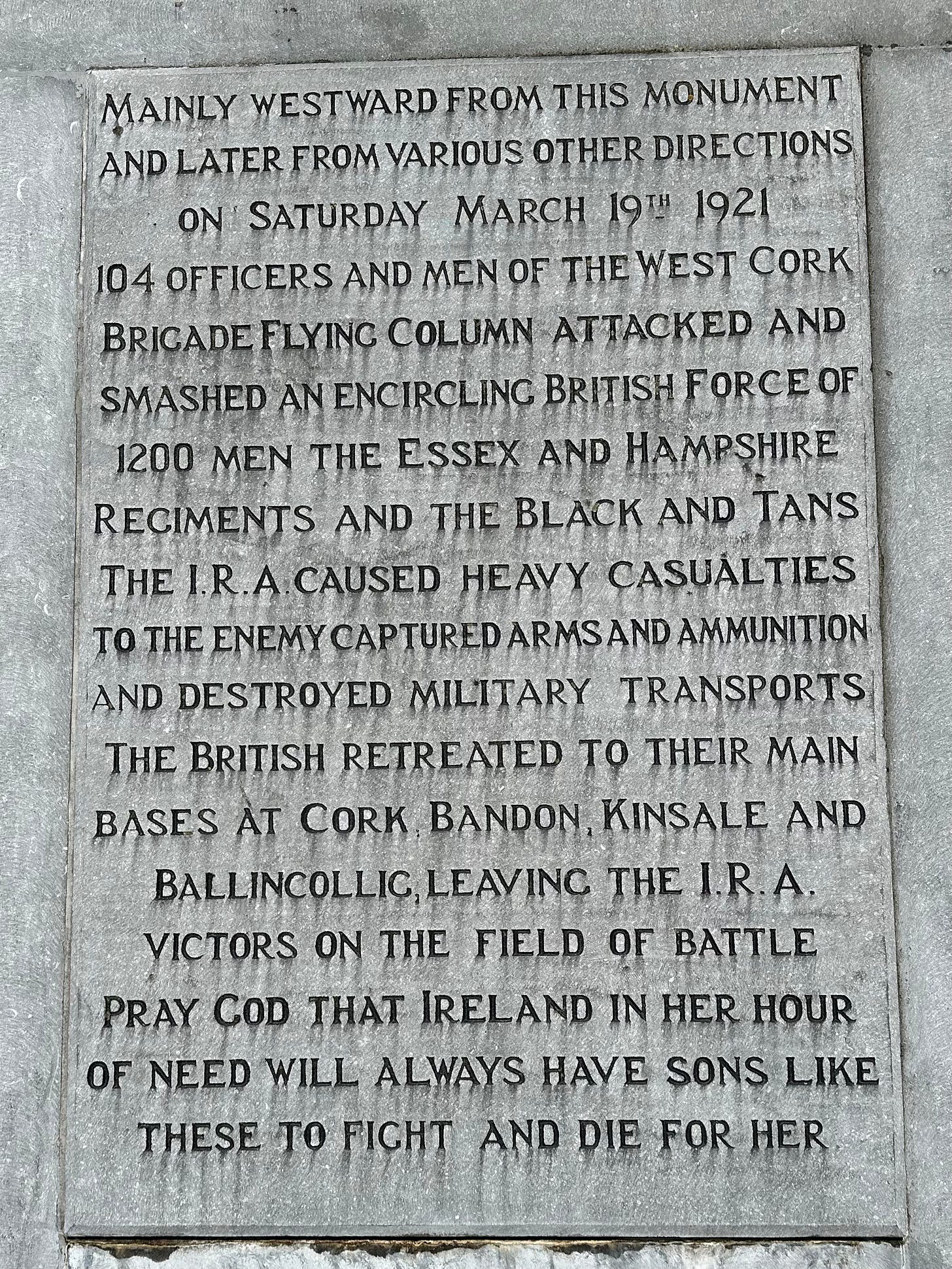
Part of the memorial, describing the battle.
My grandfather left Ireland after this. He is often described as a bit of a rogue and while my memories of him are limited – he died when I was five – I can see why this term might be the case. He was a wonderful grandfather and I have great memories, and even at five years old, I can recall a strength of character that I can, now as an adult, appreciate where it came from.
I don’t have any profound or deep answers to the ‘should I feel proud’ questions. I am proud and simultaneously, think this pride is justified in my grandfather. I think much comes down to the nature of the conflict. It was a war of independence and with the brutality one expects of such conflicts. Both sides fought for a cause they believed in or at the very least, felt compelled to be part of. I think we can say, it was a conflict that was not random or generated out of a false premise.
It is something I will continue to reflect on and perhaps, most profoundly, being aware of such questions is what is important even if the answers are not articulate or clear.
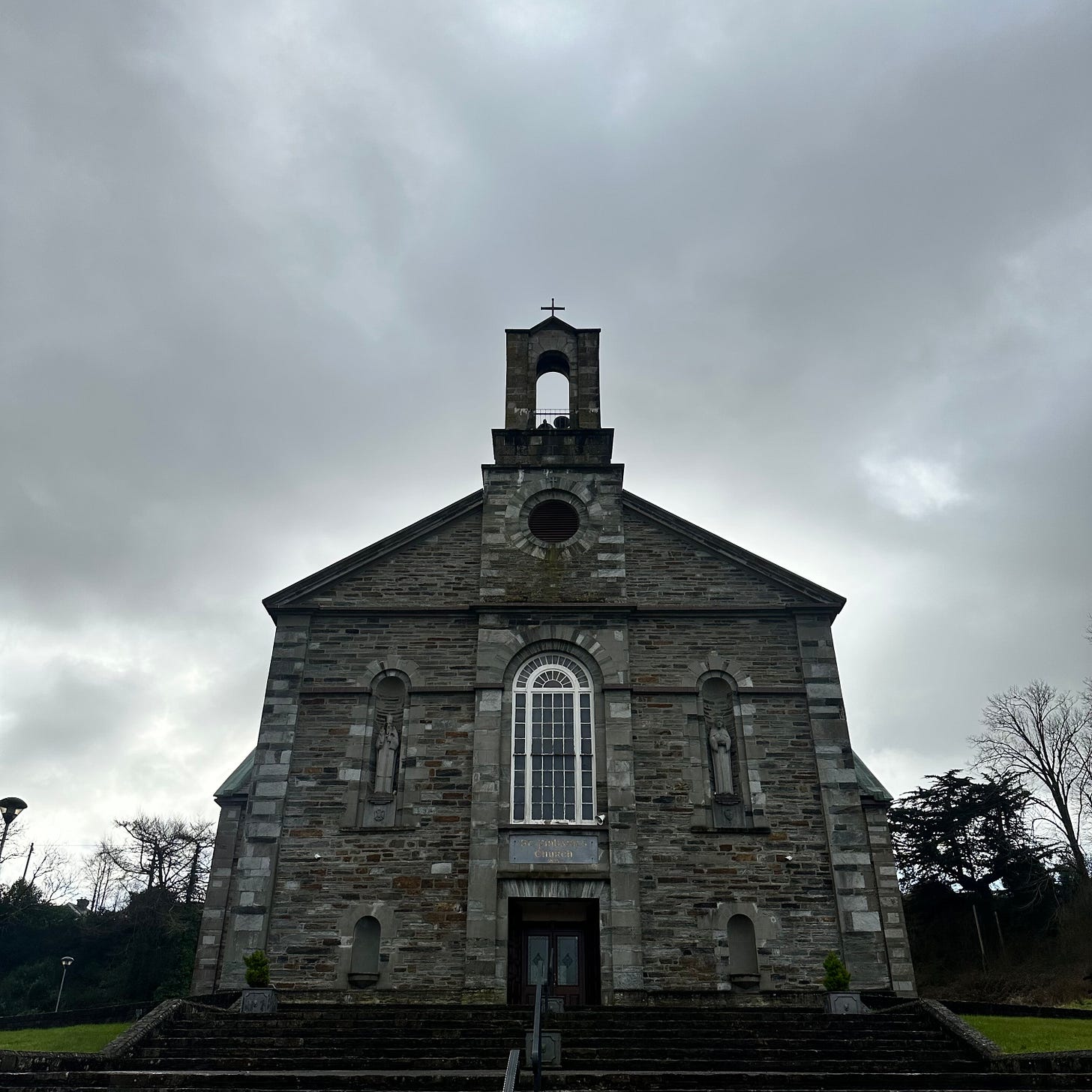
My grandfather’s church in Bantry; something more peaceful than a battlesite!
Our Contributor
